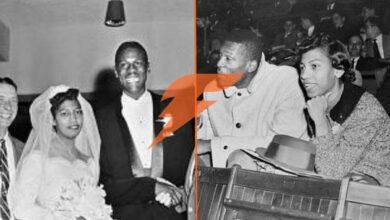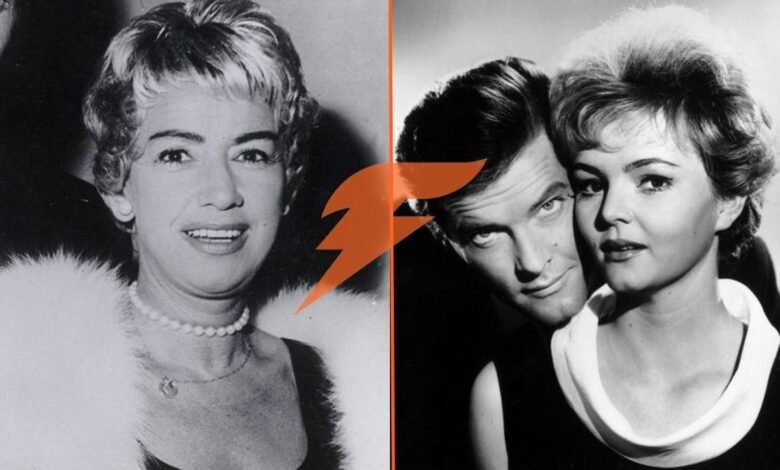
Doorn Van Steyn lived a far more varied life than her familiar description as Roger Moore’s first wife suggests. Born Lucy Woodard, she explored performance, travel, family life, photography, and visual art.
She worked as a model, actress, and professional ice skater during a changing period in British entertainment. Her abilities later carried her beyond Britain and introduced her to new cultures and communities.
Her marriage to Moore remains the most discussed chapter of her biography, but it represented only one stage. Her story also includes motherhood, religious conversion, work in Israel, and creative activity in the United States. Together, these chapters reveal a life shaped by reinvention rather than one famous relationship.
Quick Bio
| Field | Details |
|---|---|
| Full Name | Doorn Van Steyn |
| Birth Name | Lucy Woodard |
| Stage Name | Gilda |
| Known For | First wife of Sir Roger Moore |
| Date of Birth | November 30, 1921 |
| Place of Birth | Lambeth, London, England |
| Nationality | British |
| Profession | Actress, model, professional ice skater, photographer, and stained-glass artist |
| Acting Credits | The Trojan Brothers, Madame Louise, and Tel Aviv Taxi |
| Famous Former Husband | Roger Moore |
| Marriage to Roger Moore | 1946 to 1953 |
| Other Reported Husbands | Wilhelmus van Steyn, Ami Solell, and Ronald Hodge |
| Children | Shaun and Jody |
| Religion | Converted to Judaism while living in Israel |
| Languages | English, French, Spanish, and Hebrew |
| Places Lived | England, Israel, and the United States |
| Residence in Israel | Kiryat Ono |
| Later Residence | Washington, D.C., United States |
| Height | 5′ 7′ |
| Ethnicity | Caucasian |
| Estimated Net Worth | Not publicly confirmed |
| Date of Death | August 23, 2010 |
| Age at Death | 88 years old |
| Cause of Death | Not publicly confirmed |
| Legacy | Remembered as a creative performer, international traveler, artist, and Roger Moore’s first wife |
Who Was Doorn Van Steyn?
Doorn Van Steyn was a British performer and artist who became publicly known through entertainment work and her marriage to Sir Roger Moore. Her birth name was Lucy Woodard, although she later used other names professionally.
Biographical records place her birth on November 30, 1921, in Lambeth, London, England. She died on August 23, 2010, at the age of 88.
Her professional life included modeling, acting, ice skating, photography, and stained-glass work. She also appeared in The Trojan Brothers, Madame Louise, and Tel Aviv Taxi, creating a modest but international screen record. Her biography therefore belongs to both entertainment history and the broader story of twentieth-century migration.
Early Life, Birth Name, and Background
Verified information about Lucy Woodard’s parents, childhood home, and formal education remains limited. Reliable biographies focus mainly on her adult relationships, professional activities, and international travels.
She grew up in London, where theater, fashion work, and performance culture may have encouraged her creative interests. However, specific details about her schooling or artistic training are not publicly confirmed.
She held British nationality and later became known as Doorn Van Steyn and the stage performer Gilda. Her evolving identity reflected marriage, travel, religious conversion, and repeated efforts to rebuild her life. These changes also explain why different sources sometimes describe her through different names and roles.
Modeling, Acting, and Ice Skating Career
Before Roger Moore achieved fame, Lucy had already entered several public-facing professions. She developed experience as a model, actress, and professional ice skater.
Modeling required confidence, presentation skills, and comfort before audiences or cameras. Professional skating demanded balance, stamina, regular practice, and the ability to combine athletic movement with theatrical expression.
Her acting credits included The Trojan Brothers in 1946, Madame Louise in 1951, and Tel Aviv Taxi in 1956. Although she never became a major film star, these appearances confirmed her sustained connection to entertainment. Her varied career also showed how performers often moved between several creative professions during that era.
The Stage Name Gilda and Touring Ice Shows
After her marriage to Roger Moore ended, Lucy returned more fully to live performance. She joined a traveling ice show and appeared under the glamorous stage name Gilda.
Touring required resilience because performers faced physical strain, changing venues, long journeys, and uncertain schedules. Lucy used those demands to earn independently and establish an identity beyond her former marriage.
One important tour stop brought her to Tel Aviv, where her skating attracted attention. That visit eventually influenced her decision to remain in Israel and begin another major chapter of her personal life. The tour therefore became more than employment because it redirected her family and cultural identity.
How She Met Roger Moore
Lucy met Roger Moore in 1946 while both were associated with the Royal Academy of Dramatic Art, widely known as RADA. Moore was still a young student and aspiring actor.
He was approximately 19 years old and had not yet developed the polished image later connected with The Saint and James Bond. Lucy was older, more experienced, and already a mother.
Their different ages and responsibilities shaped the relationship from its beginning, but the couple developed strong feelings quickly. They married during the same year, before either could establish lasting financial stability. Their rapid courtship placed emotional commitment ahead of the practical security usually needed for married life.
Doorn Van Steyn and Roger Moore’s Marriage
Doorn Van Steyn and Roger Moore married in 1946, long before Moore became an international television and film star. Their early married life involved financial uncertainty, shared housing, and professional disappointment.
They reportedly stayed with members of her family in Streatham, London, because independent living was difficult. Moore pursued acting while accepting modeling assignments and other available work to support himself.
Their marriage officially ended in divorce in 1953 after approximately seven years. Later accounts described affection, ambition, arguments, resentment, and emotional volatility rather than a simple or peaceful relationship. The marriage unfolded before Moore’s fame transformed how the public later interpreted his early experiences.
Financial Struggles and Career Pressure
Money remained a persistent problem during the marriage because Moore had not secured regular acting success. Entertainment work offered limited stability, especially for a young performer without established industry influence.
He accepted commercial modeling jobs, including knitwear assignments, while searching for stronger screen opportunities. These jobs provided some income but could not guarantee a secure household or predictable future.
Moore later recalled that Lucy questioned his acting prospects and criticized his appearance, although these statements represented his personal perspective. Postwar Britain also faced housing shortages, rationing, and economic pressure that affected many young couples. These conditions do not explain every conflict, but they formed an important background to the household’s instability.
Domestic Conflict and Abuse Allegations
Roger Moore later alleged that the marriage involved physical and emotional abuse. He claimed Lucy sometimes punched, scratched, or struck him when arguments became intense.
Published accounts also repeated his statement that she once threw a teapot at him. These claims became widely discussed because Moore later achieved extraordinary fame and described the relationship publicly.
A balanced biography must identify these statements as allegations made by Moore, not independently established facts. Lucy could not answer much of the later discussion, while family reflections reportedly suggested a relationship containing both affection and conflict. Careful wording prevents a sensitive private history from becoming exaggerated or unfairly simplified.
Separation, Divorce, and Dorothy Squires
By the early 1950s, the marriage had deteriorated significantly, and both partners appeared increasingly unhappy. Moore met Dorothy Squires, a successful Welsh singer, during this troubled period.
His developing relationship with Squires became connected to the separation timeline. Lucy and Moore formally divorced in 1953, and Moore later married Squires while continuing to pursue acting opportunities.
Reports about letters discovered by Lucy’s son Shaun later suggested genuine tenderness alongside betrayal, resentment, and emotional distress. The surviving material therefore presents the marriage as complicated rather than entirely one-sided. Their divorce ultimately allowed both individuals to pursue separate relationships, careers, and geographic paths.
Life After Divorce and Move to Israel
Divorce did not end Lucy’s personal or professional development. She used her skating background to join a touring company, regain financial direction, and build a public identity as Gilda.
After performing in Tel Aviv, she chose to remain in Israel and became known locally through skating. She later married Ami Solell, converted to Judaism, and lived in Kiryat Ono.
Public accounts state that she had a son during this chapter and later worked with children and in retail. Her marriage to Solell also ended, but reliable details about the separation remain limited. Even so, the Israeli period remains one of the clearest examples of her adaptability and independence.
Later Marriages, America, and Creative Work
Biographical listings identify Wilhelmus van Steyn as an earlier husband and Ronald Hodge as a later or final husband. Detailed timelines and private circumstances surrounding those marriages are not widely documented.
Lucy moved to Washington, D.C., in 1967 and began another major stage of her life. Published accounts associate her with photographic work for National Geographic, although complete employment details remain unavailable.
Photography suited her long involvement with visual presentation, movement, and performance. In later years, she also created stained-glass art, showing that her interest in color, form, and craftsmanship continued beyond skating. This transition demonstrated that creativity remained central even when her public performance years had ended.
Children and Family Life
Lucy was already a mother when she married Roger Moore, and her son Shaun belonged to the household during Moore’s uncertain early career. His presence added practical responsibility to the young marriage.
Shaun later contributed indirectly to public understanding of the relationship. Reports stated that he discovered letters and personal material after his mother’s death, offering a more intimate view of the couple.
She later had another son, Jody, during her life in Israel. Motherhood connected different stages of her story across Britain, Israel, and America, even when media attention focused mainly on her famous former husband. Her family role deserves the same attention as her entertainment work and marriages.
Death and Final Years
Lucy Woodard, known publicly as Doorn Van Steyn, died on August 23, 2010, at the age of 88. She had lived for decades beyond her short period in British celebrity circles.
Her specific cause of death has not been widely confirmed through dependable public records. Responsible biographies should therefore avoid repeating unsupported medical explanations or presenting uncertain details as established fact.
She died before renewed interest in her marriage followed later interviews, documentaries, and media discussions about Roger Moore. By then, she had lived across three countries and pursued several creative professions. Her final years remained comparatively private, which partly explains the limited detail available in public biographies.
Doorn Van Steyn’s Legacy
Doorn Van Steyn’s legacy remains closely connected to Roger Moore, but her own achievements deserve recognition. She repeatedly built new identities through performance, art, travel, family life, and cultural adaptation.
She worked as an actress, model, skater, photographer, and stained-glass artisan. Each occupation reflected discipline, visual awareness, confidence, and a willingness to learn new forms of creative expression.
The abuse allegations remain part of the public record, but they should not erase every other aspect of her biography. Her complete story presents a complicated woman who faced difficult changes and repeatedly moved forward. That broader perspective offers a more humane legacy than reducing her to a disputed marriage narrative.
Final Thoughts
Born Lucy Woodard, she became known as a performer, traveler, mother, artist, and the first wife of Roger Moore. Her marriage brought lasting attention, but it never represented her entire identity.
Her life continued through touring ice shows, Israel, Washington, photography, stained glass, new relationships, and family responsibilities. She consistently found practical and creative ways to begin again.
The available record still contains gaps, especially around childhood, marriages, and later employment. Remembering her accurately requires separating confirmed facts from claims while recognizing the unusual breadth of her life. Her journey ultimately combines performance history, personal struggle, migration, motherhood, and enduring artistic curiosity.
Frequently Asked Questions
Who was Doorn Van Steyn?
She was a British actress, model, professional ice skater, photographer, and stained-glass artist. She became best known as Roger Moore’s first wife.
Her birth name was Lucy Woodard. Her life also included international travel, motherhood, work in Israel, and later residence in the United States.
What was Doorn Van Steyn’s real name?
Her birth name was Lucy Woodard. She later became publicly known as Doorn Van Steyn, a name connected to her marriage history.
She also used Gilda as a stage name while performing in touring ice shows after her divorce from Roger Moore.
When did she marry Roger Moore?
She married Roger Moore in 1946, when he was still a young acting student. Their marriage ended in divorce in 1953.
The relationship took place before Moore gained major fame through The Saint and his later appearances as James Bond.
Did she have children?
Yes. Public accounts identify two sons, Shaun and Jody. Shaun was already part of her life when she married Roger Moore.
Jody was born during her later chapter in Israel. Detailed information about both sons remains limited and deserves respectful treatment.
When did Doorn Van Steyn die?
She died on August 23, 2010, at the age of 88. Her specific cause of death has not been widely confirmed.
She left a complex legacy involving performance, art, family life, international travel, religious change, and a famous early marriage.